Calm-Down Strategies for Meltdowns: What Actually Works (And What Doesn’t)
We’ve all been there. The screaming. The flailing. The complete and total emotional explosion that started over… a broken cracker? The wrong socks? Something so small you can’t even remember what triggered it?
Meltdowns are one of the hardest parts of parenting young children. They’re loud, they’re public, they’re exhausting, and in the moment, it feels like nothing you do makes any difference.
But here’s what I want you to know: there are strategies that actually work. And just as importantly, there are common approaches that backfire. Let’s break down the science and give you a practical toolkit for weathering the storm.
First: Understanding What a Meltdown Actually Is
A meltdown isn’t a tantrum. It’s not manipulation. It’s not “bad behavior.”
When a child is in full meltdown mode, their prefrontal cortex—the rational, logical part of the brain—has gone offline. The emotional brain (limbic system) has taken over completely. This is sometimes called “flipping the lid.”
In this state, children literally cannot:
- Process logic or reasoning
- Make good decisions
- Control their bodies
- Listen to instructions
- Learn from the experience
Understanding this changes everything about how we respond. You can’t reason with a child whose reasoning brain isn’t accessible. You have to help them regulate first.
What Doesn’t Work (Even Though We All Try It)
Reasoning and Logic
“If you stop crying, we can have a snack.” “You’re making a big deal out of nothing.” “Just calm down and tell me what’s wrong.”
When the prefrontal cortex is offline, logic doesn’t land. It’s like trying to have a conversation with someone who doesn’t speak your language. Save the problem-solving for later.
Yelling or Getting Angry
I know. Sometimes you just want to yell louder than they are. But matching their intensity escalates rather than calms. Your dysregulation adds fuel to their fire.
Punishment and Threats
“If you don’t stop, you’re going to time-out.” “No tablet for a week if you keep this up.”
In meltdown mode, children can’t think ahead to consequences. Threats just add fear and shame to an already overwhelming emotional experience.
Dismissing the Feeling
“You’re fine.” “Stop crying, there’s nothing to cry about.” “Big kids don’t act like this.”
Dismissal teaches kids that their feelings are wrong or bad. It doesn’t stop the feeling—it just adds shame on top.
Trying to Fix It Immediately
We love to problem-solve as parents. But jumping to solutions before the storm has passed usually backfires. The fix can wait.
What Actually Works: The During-Meltdown Toolkit
1. Regulate Yourself First
Before you can help your child, you need to be regulated yourself. This is hard when someone is screaming in your face, but it’s essential.
Quick self-regulation:
- Take a slow breath (or three)
- Relax your shoulders
- Soften your face
- Lower your voice
- Remember: “This is not an emergency. This is a child having a hard time.”
Your calm is contagious. Children co-regulate with us—they borrow our emotional state. If you’re dysregulated, they can’t calm down.
2. Get Close and Get Low
Physical proximity and position matter:
- Move closer (not in an intimidating way)
- Get down to their eye level or below
- Make yourself smaller and less threatening
- Open body language—arms uncrossed, relaxed posture
Being physically close signals safety. It also makes it easier to prevent harm if they’re throwing things or hitting.
3. Reduce Stimulation
In an overwhelmed state, less is more:
- Fewer words (or none at all)
- Quieter voice (almost a whisper can be powerful)
- Dim lights if possible
- Move to a less stimulating space if you can
- Remove audience (siblings, onlookers)
4. Offer Calm, Simple Connection
Sometimes words aren’t needed. Just your presence is enough:
- Sit nearby without touching
- Offer a hand if they want it
- Say something simple: “I’m here. I’m with you.”
- Breathe slowly and loudly (they might unconsciously match it)
5. Name the Feeling (Simply)
Once there’s a tiny opening, you can try:
- “You’re really upset.”
- “This is so hard.”
- “I can see you’re hurting.”
Don’t ask questions or require responses. Just reflect what you see.
6. Wait It Out
Sometimes, despite everything you do, the meltdown needs to run its course. That’s okay. You’re not failing. You’re providing a safe container while the storm passes.
Your job is not to stop the meltdown. It’s to be there through it.
Physical Strategies That Help
When the emotional brain is flooded, the body can be an easier access point than words:
Deep Pressure
- Firm hugs (if wanted)
- Weighted blankets
- Tight squeezes to hands or arms
- “Bear hugs” where they squeeze you
Movement
- Stomping feet
- Pushing against a wall
- Punching a pillow
- Jumping
- Swinging (if available)
Sensory Reset
- Cold water on face or hands
- Something crunchy to chew
- Strong smell (peppermint, citrus)
- Squishy putty or stress ball
- Calming patches with lavender or chamomile
Breathing Techniques (When Ready)
- Blow out “birthday candles” on your fingers
- Smell the flower (inhale), blow out the candle (exhale)
- Breathe together—you exhale loudly, they start to match
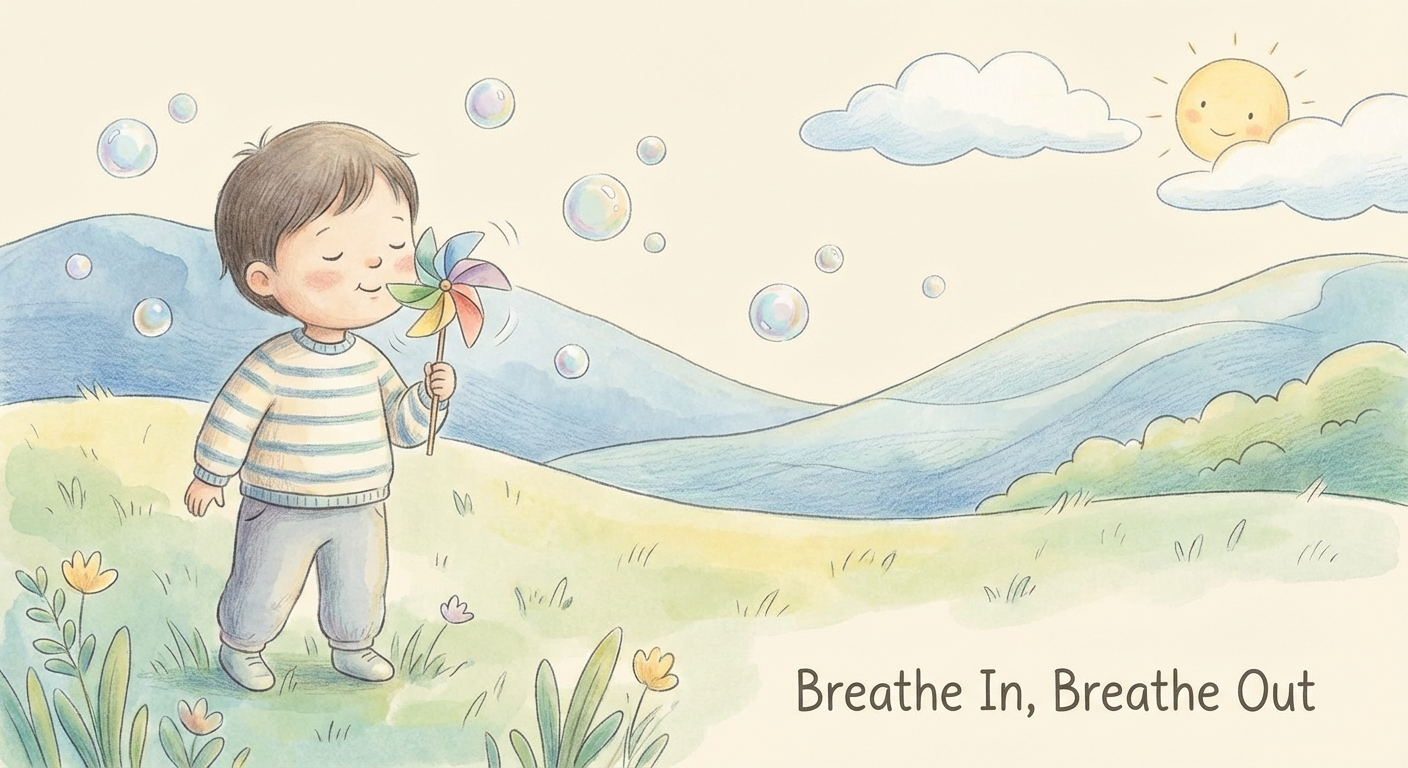
- Blow bubbles (forces slow, controlled breaths)
Note: These work best when practiced during calm moments. In the midst of a meltdown, just model slow breathing yourself.
After the Storm: Repair and Learn
Once everyone is calm (and not before), there’s an opportunity for connection and growth.
1. Reconnect
A meltdown can feel scary and disconnecting for kids. Let them know the relationship is intact:
- “I love you. Even when you’re having a hard time.”
- Cuddles, if they want them
- A gentle activity together
2. Reflect (When Ready)
Later—maybe hours later—you can talk about what happened:
- “You had some really big feelings earlier.”
- “What was happening right before you got upset?”
- “What helped you calm down?”
Keep it curious, not punishing. The goal is understanding, not blame.
3. Problem-Solve
If there’s an issue to solve (the wrong socks, the broken cracker), now is the time:
- “It sounds like you really wanted the whole cracker. I understand.”
- “Tomorrow, do you want to pick your own socks?”
Avoid solving during the meltdown. It won’t register.
4. Plan for Next Time
Collaboratively think about what might help:
- “When you feel that mad feeling starting, what could you try?”
- “Would it help to have a cozy corner to go to?”
- “Let’s practice some calm-down breaths so they’re ready when you need them.”
Creating a Calm-Down Toolkit
Work with your child (during a calm moment) to create a personalized toolkit:
Physical tools:
- Stress balls or squishy toys
- Weighted lap pad or stuffed animal
- Noise-canceling headphones
- Cozy blanket
Sensory tools:
- Lavender spray or calming essential oils
- Chewy snacks
- Natural calming patches
- Glitter jar (shake it up, watch it settle)
Activity tools:
- Coloring sheets and crayons
- Playdough or kinetic sand
- Favorite books
- Breathing exercise cards
Keep these in a designated “calm-down corner” or basket that kids can access independently as they get older.
Preventing Meltdowns (When Possible)
Some meltdowns can’t be prevented. But many can be reduced with:
Meeting Basic Needs
- Adequate sleep (the #1 meltdown trigger)
- Regular meals and snacks
- Physical activity
- Connection time with parents
Recognizing Early Warning Signs
- Whining or increased clinginess
- Pickiness or rigidity
- Physical agitation
- The “look” in their eyes
When you see signs, intervene early:
- “You seem tired. Let’s take a break.”
- “I notice you’re getting frustrated. What do you need?”
Giving Transitions Extra Support
Transitions are meltdown minefields. Help with:
- Advance warnings (“In five minutes, we’ll leave the park”)
- Visual timers
- Transition objects (something they can bring along)
- Songs or games that make transitions fun
Teaching Emotional Skills in Calm Moments
The middle of a meltdown is the worst time to teach regulation. Practice during calm times:
- Read books about emotions
- Play feelings games
- Practice breathing techniques
- Role-play difficult scenarios
Special Considerations
Highly Sensitive Children
Some children feel everything more intensely. They may need extra compassion, more time to process, and more sensory accommodations.
Children with ADHD or Autism
Meltdowns may be more frequent and more intense. Strategies might need to be adapted, and professional support can be invaluable.
When You’re at the End of Your Rope
If meltdowns are constant and your strategies aren’t working, it’s okay to seek help. Talk to your pediatrician or consider a child therapist who specializes in emotional regulation.
And on the days when you lose your cool? Forgive yourself. Repair with your child. Tomorrow is a new day.
The Big Picture
Meltdowns are not failures—not yours and not your child’s. They’re a sign of a developing brain that hasn’t yet learned to regulate. Every meltdown is an opportunity to build those skills, one storm at a time.
You are exactly the parent your child needs. Even when it’s messy. Especially when it’s hard.
Keep showing up. Keep staying calm (or trying to). Keep loving them through the hardest moments.
That’s what matters.
What strategies have helped your family weather meltdowns? What questions do you have? Share in the comments—we’re all learning together.