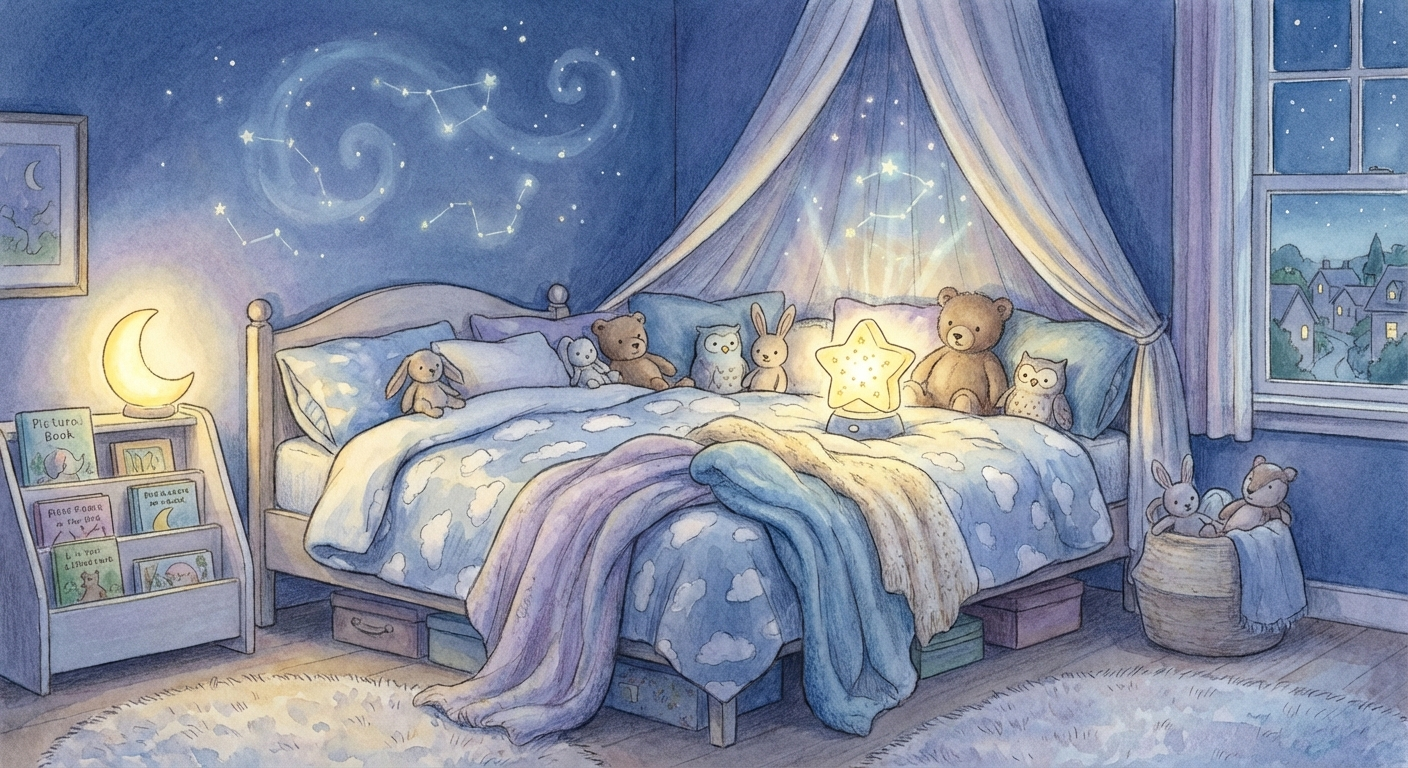
Creating the Perfect Sleep Environment for Kids: A Room-by-Room Guide
You’ve got the bedtime routine down, screens are off, and everyone’s in pajamas—but your child is still struggling to fall asleep or stay asleep. Before you chalk it up to “just one of those phases,” take a look around their bedroom.
The sleep environment matters more than most parents realize. Small changes to lighting, temperature, and ambiance can make a surprising difference in how quickly kids fall asleep and how well they stay asleep.
Let’s walk through everything you can optimize to turn your child’s room into a true sleep sanctuary.
Why Environment Matters
Our brains are constantly scanning for signals about whether it’s safe to sleep. Light levels, temperature, sounds, and even smells all communicate information to our nervous system.
For kids—whose brains are still developing the ability to filter out distractions—environmental factors can be even more impactful. A bedroom that’s too bright, too warm, or too stimulating can keep their system on alert, even when they desperately need rest.
The good news? Most environmental factors are completely within your control.
Lighting: Your Most Powerful Tool
Light is the primary regulator of our circadian rhythm. Get this one right, and everything else becomes easier.
During the Day
Natural light exposure during the day actually helps with sleep at night. It sets the body’s internal clock and ensures robust melatonin production when darkness comes.
- Open curtains first thing in the morning
- Aim for outdoor time, especially in the morning hours
- Keep indoor spaces well-lit until evening
In the Evening
As bedtime approaches, start dimming lights throughout the house. This signals to the brain that sleep is coming.
- Use dimmers or switch to lamps with softer bulbs
- Avoid bright overhead lights in the hour before bed
- Keep screens in night mode (though ideally off entirely)
At Bedtime and Overnight
This is where many bedrooms fall short. True darkness is important for quality sleep.
Blackout solutions:
- Blackout curtains or blinds (look for ones that seal at the edges)
- Blackout window film for stubborn light leaks
- Temporary solutions like cardboard or aluminum foil if needed
Eliminate electronic light:
- Cover or remove any devices with LED lights
- Choose alarm clocks with dim red displays (red light is least disruptive to sleep)
- If a nightlight is needed, use the dimmest one possible in red or amber
The nightlight question: Some kids genuinely need a nightlight for comfort. If yours does:
- Choose warm colors (red, orange, or amber) over blue or white
- Place it low and away from the bed
- Use the dimmest option that still provides comfort
- Consider motion-activated lights for middle-of-night bathroom trips
Temperature: The Goldilocks Zone
Body temperature naturally drops during sleep, and a cool room supports this process. Most kids sleep best in rooms between 65-70°F (18-21°C).
Signs the room is too warm:
- Kicking off covers repeatedly
- Sweaty hair or damp pajamas
- Restless sleep
- Waking up multiple times
Signs the room is too cold:
- Difficulty falling asleep
- Curling up tightly
- Cold hands and feet
- Waking early
Tips for temperature control:
- Use a programmable thermostat to drop temperature at bedtime
- Choose breathable cotton or bamboo bedding
- Dress kids in seasonally appropriate, breathable pajamas
- Consider a fan for air circulation (bonus: white noise!)
- In warm months, a cool bath before bed can help lower body temperature
Sound: Finding the Right Balance
Complete silence isn’t necessarily ideal—it can actually make kids more sensitive to every little noise. Consistent, low-level background sound often works better.
White Noise
A white noise machine or fan creates a consistent sound layer that masks disruptions. This is especially helpful for:
- Homes with thin walls or noisy neighbors
- Kids who share rooms
- Light sleepers who wake at small sounds
- Households where adults stay up later than kids
Tips for using white noise:
- Keep the volume low (about 50-60 decibels—roughly the sound of a shower)
- Place the machine away from the bed, not right next to ears
- Choose a consistent, non-looping sound
- Start it before your child falls asleep so it’s part of the routine
Music and Audiobooks
Some children fall asleep better with quiet, calming music or a gentle audiobook. If this works for your child:
- Use a sleep timer so it turns off after they’re asleep
- Keep the volume very low
- Choose predictable, calm content (no exciting plots!)
- Nature sounds or classical music work well for many kids
What to Avoid
- Sudden sounds or sound effects
- Music with lyrics (too engaging for the brain)
- Television (combination of sound and light is stimulating)
- Leaving things running all night without a timer (except white noise)
Bedding and Comfort
Where your child sleeps matters just as much as the room around them.
The Mattress
A comfortable, supportive mattress is foundational. Most children’s mattresses need replacing every 8-10 years. If your child is waking with aches, sinking into the mattress, or the surface is visibly worn, it might be time.
Pillows
Kids don’t need pillows until around age 2, and even then, a flat, firm pillow is best. Avoid big fluffy pillows that can strain the neck or pose safety risks.
Bedding
- Choose natural, breathable fabrics like cotton or bamboo
- Avoid synthetic materials that trap heat
- Layer blankets so kids can adjust warmth
- Consider a weighted blanket for kids over 3 who find pressure soothing (choose 10% of body weight)
The Bed Itself
For toddlers transitioning from cribs, keep the bed low and consider a floor bed or bed rails. A secure, cozy setup helps kids feel safe.
Reducing Stimulation
A bedroom cluttered with toys is a bedroom that invites play, not sleep. The environment should signal that this space is for rest.
Declutter strategies:
- Keep toys in another room or in closed storage
- Remove screens entirely (TVs, tablets, phones)
- Clear surfaces and minimize visual chaos
- Use calming colors for décor (blues, greens, soft neutrals)
Creating a cozy vibe:
- A special stuffed animal or comfort object kept only in bed
- Cozy, inviting bedding
- Personal touches that make the space feel safe (photos, special blanket)
- Nothing scary or overstimulating visible from the bed
Scent and Aromatherapy
Our sense of smell has powerful connections to relaxation and memory. Using calming scents consistently can become a sleep cue over time.
Sleep-supportive scents:
- Lavender (the most studied for sleep)
- Chamomile
- Vanilla
- Bergamot
How to use safely:
- Diffuse essential oils (keep diffuser out of reach)
- Linen sprays on pillows or bedding
- Sachets under pillows
- Natural sleep patches with calming aromatherapy ingredients
Safety notes:
- Never apply essential oils directly to children’s skin without proper dilution
- Avoid oils near babies under 3 months
- Ensure good ventilation
- Stop use if any irritation occurs
Air Quality
Fresh, clean air supports better sleep. Consider:
- Opening windows during the day for ventilation
- Changing HVAC filters regularly
- Using an air purifier if allergies are an issue
- Adding houseplants that clean air (spider plants, peace lilies)
- Keeping the room dust-free with regular cleaning
Creating a Consistent Sleep Space
Once you’ve optimized the environment, keep it consistent. The bedroom should become a powerful sleep cue—the moment your child walks in, their brain starts preparing for rest.
Maintenance habits:
- Keep bedtime conditions the same every night
- Don’t use the bedroom for timeouts or punishment
- Reserve the bed for sleep (not playing, homework, or screens)
- Maintain the routine so the environment becomes associated with sleep
Your Action Plan
You don’t need to overhaul everything at once. Start with the highest-impact changes:
- This week: Audit the lighting and eliminate unnecessary light sources
- Next week: Check the temperature and adjust bedding accordingly
- Week three: Add white noise if not already using it
- Ongoing: Declutter and reduce stimulation gradually
Each improvement builds on the last, and within a month, you could have a completely transformed sleep environment.
The Ripple Effect
Here’s the beautiful thing: when kids sleep better, everything gets easier. Better sleep means better moods, better focus, better behavior, and a more peaceful home for everyone.
The bedroom is the foundation. Set it up for success, and you’re giving your child the best possible chance for the restorative sleep they need.
What’s one change you could make to your child’s sleep environment this week? Share your ideas and what’s worked for your family!