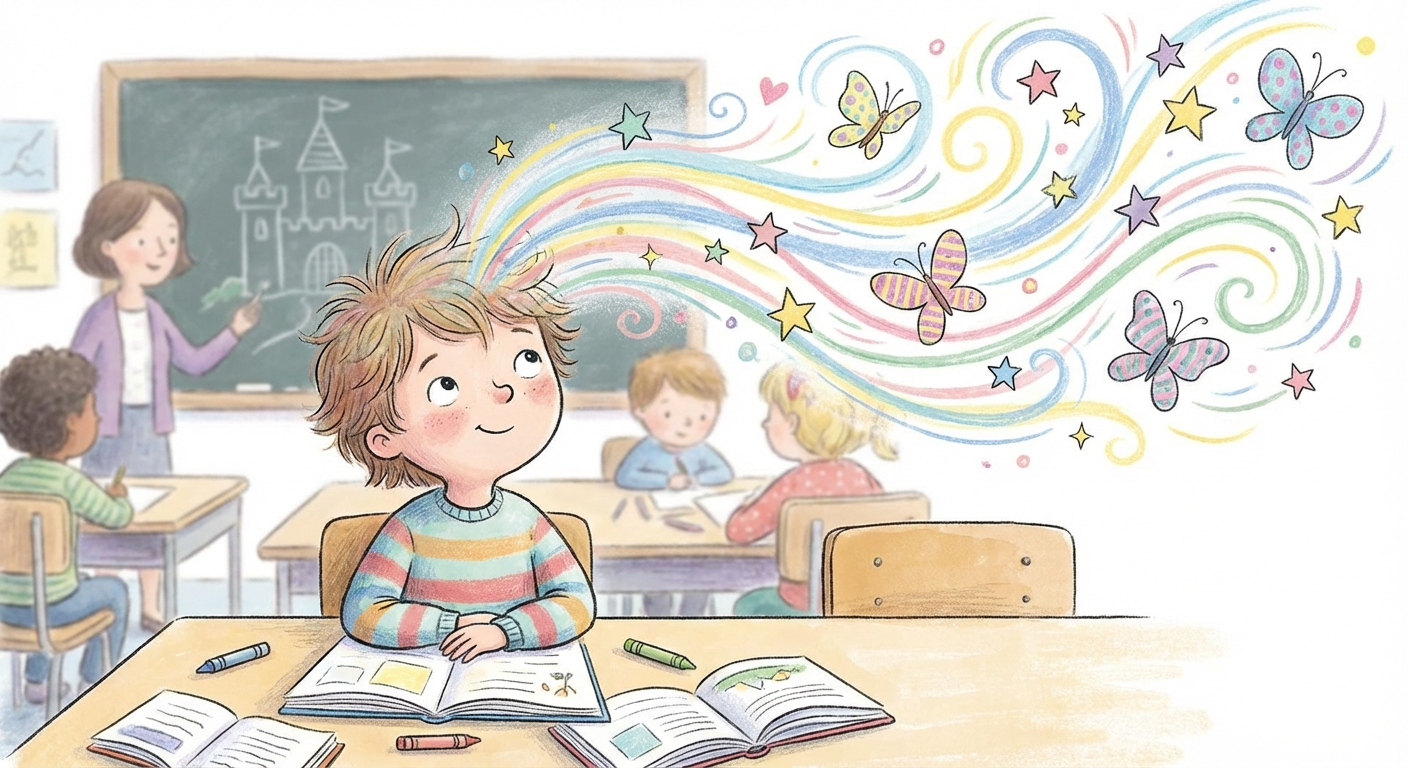
Is My Child’s Distraction Normal or Something More? A Parent’s Guide
You’ve called your child’s name three times. They’re staring at the wall, completely absorbed in some internal world, while their cereal gets soggy and the morning ticks away.
Or maybe it’s homework time, and despite sitting right in front of their assignment, they’ve somehow spent 40 minutes accomplishing nothing—distracted by every sound, every thought, every speck of dust floating in the air.
As a parent, you wonder: Is this just being a kid? Or is something else going on?
It’s a question that keeps many of us up at night. Let’s explore what’s normal, what might be concerning, and how to find the clarity you need.
All Kids Get Distracted—That’s Normal
First, let’s establish the baseline: distraction is part of childhood.
Children’s brains are developing rapidly, and the prefrontal cortex—the part responsible for attention, focus, and impulse control—is literally under construction until the mid-20s. This means:
- Kids have shorter attention spans than adults
- They’re naturally more distractible
- They struggle with sustained focus, especially on boring tasks
- They have difficulty filtering out irrelevant information
General attention span guidelines by age:
- 2 years: 4-6 minutes
- 3 years: 6-8 minutes
- 4 years: 8-12 minutes
- 5-6 years: 12-18 minutes
- 7-8 years: 16-24 minutes
- 9-10 years: 20-30 minutes
- 11-12 years: 25-35 minutes
These are rough estimates for focused, adult-directed activities. Kids can focus much longer on things they’re genuinely interested in—which is completely normal.
Signs of Typical Childhood Distraction
Normal developmental distraction usually looks like:
Situational Focus Issues
The child focuses well in some situations but not others. They’re laser-focused on video games or Legos but can’t pay attention during math class. This interest-dependent attention is developmentally normal.
Occasional Difficulty Following Instructions
Sometimes forgetting steps in a multi-part instruction, especially when distracted or excited, is typical. “Go upstairs, brush your teeth, and get your backpack” might turn into “I went upstairs… wait, what was I supposed to do?”
Distractibility in Non-Preferred Activities
Struggling to pay attention during activities they find boring—like chores or certain schoolwork—while focusing well on enjoyable activities is normal. Motivation affects attention significantly.
Improvement Over Time
As children mature, their focus generally improves. If you notice gradual progress in attention span as your child ages, that’s a healthy developmental trajectory.
Better Focus with Engagement
When an activity is hands-on, interesting, or involves movement, they focus better. This is typical—engaged kids pay attention better than bored kids.
Red Flags That Might Indicate Something More
While some distraction is normal, certain patterns may suggest an attention disorder like ADHD or another underlying issue:
1. Consistency Across Settings
ADHD and other attention disorders typically show up across multiple environments—not just at home or just at school. If teachers, grandparents, coaches, and you at home all notice significant focus problems, that’s more concerning than issues in just one setting.
2. Developmentally Inappropriate Inattention
It’s one thing for a 4-year-old to struggle with sustained focus. It’s different when an 8-year-old can’t focus any better than a 4-year-old, or when the inattention is significantly more pronounced than peers.
3. Inability to Focus Even When Motivated
With normal developmental distraction, kids can usually focus on things they really care about. With ADHD, children often struggle even with activities they want to do. They might desperately want to finish a game or complete a project but still can’t sustain attention.
4. Significant Impact on Functioning
When distraction significantly interferes with:
- Academic performance
- Completing daily tasks
- Maintaining friendships
- Following safety rules
- Overall quality of life
…that’s beyond typical childhood distractibility.
5. Additional Symptoms
Attention disorders often come with other signs:
- Hyperactivity: Constant movement, inability to sit still, running and climbing in inappropriate situations
- Impulsivity: Acting without thinking, interrupting constantly, difficulty waiting turn, blurting out answers
- Disorganization: Chronic messiness, frequently losing things, poor time management
- Emotional dysregulation: Intense reactions, difficulty calming down, low frustration tolerance
6. Early Onset and Persistence
ADHD symptoms typically appear before age 12 and persist over time. They don’t suddenly appear in adolescence, and they’re present consistently rather than during certain stressful periods.
Other Things That Can Look Like ADHD
Here’s where it gets tricky: several conditions can cause symptoms that look like attention problems:
Anxiety
Children with anxiety often appear inattentive because their minds are occupied with worries. They might seem distracted when they’re actually consumed by anxious thoughts.
Sleep Problems
Chronically tired children have trouble focusing. Sleep disorders, insufficient sleep, or poor sleep quality can create ADHD-like symptoms.
Learning Disabilities
A child who struggles with reading, for example, might seem distracted during reading instruction—but they’re actually frustrated or confused, not inattentive.
Sensory Processing Issues
Some children are overwhelmed by sensory input, making it hard to focus in environments with lots of noise, movement, or visual stimulation.
Hearing or Vision Problems
If kids can’t see the board or hear instructions clearly, they might check out. Simple screenings can rule these out.
Depression
In children, depression can manifest as difficulty concentrating, fatigue, and disengagement—sometimes mimicking attention problems.
Stress or Trauma
Children dealing with family stress, grief, bullying, or trauma often can’t focus because their emotional energy is consumed elsewhere.
What You Can Do Now
1. Observe and Document
Before seeking evaluation, gather information:
- When does the distraction happen?
- In what settings?
- What makes it better or worse?
- What specific behaviors are you seeing?
- How long has this been going on?
Keep notes over a few weeks. This information will be invaluable if you pursue professional evaluation.
2. Rule Out the Basics
Before assuming it’s an attention disorder:
- Check sleep: Is your child getting adequate, quality sleep?
- Evaluate screens: Excessive screen time can impair attention
- Consider diet: Regular meals with protein support focus
- Assess activity levels: Kids need physical activity
- Look at stressors: Any changes or challenges at home or school?
Sometimes addressing these fundamentals significantly improves focus.
3. Try Natural Focus Supports
While you’re observing, try strategies that support attention naturally:
- Consistent routines and structure
- Regular physical activity
- Good sleep hygiene
- Omega-3 rich foods
- Limiting processed foods and sugar
- Creating distraction-free spaces
- Using visual timers and breaking tasks into chunks
- Natural calming aids like aromatherapy or focus patches
These approaches help most kids, whether or not there’s an underlying condition.
4. Talk to Teachers
Ask teachers for their observations:
- How does your child compare to peers in terms of attention?
- In what situations do they focus best/worst?
- Have there been changes over time?
- What strategies have they found helpful?
Teachers see a wide range of kids and can offer valuable perspective.
5. Consult Your Pediatrician
If concerns persist, your pediatrician is a good starting point. They can:
- Rule out medical causes (thyroid issues, hearing/vision problems)
- Discuss your observations
- Refer to specialists if needed
- Provide behavior rating scales to clarify symptoms
6. Seek Comprehensive Evaluation
If there’s reason to pursue it further, a comprehensive evaluation might include:
- Psychological testing: Assesses attention, learning, and cognitive function
- Behavioral assessment: Standardized questionnaires for parents and teachers
- Clinical interview: Detailed history and observation
- Rule-outs: Assessing for anxiety, learning disabilities, and other conditions
Diagnoses should never be made based on a quick checklist. Proper evaluation takes time and multiple sources of information.
If It Is ADHD (Or Another Condition)
A diagnosis can actually be a relief—it explains patterns you’ve been struggling to understand and opens doors to targeted support.
Treatment options span a spectrum:
- Behavioral interventions and parent training
- Classroom accommodations
- Organizational skill-building
- Therapy (especially for co-occurring anxiety or emotional regulation issues)
- Natural approaches (exercise, nutrition, supplements, mindfulness)
- Medication (for some families, when appropriate)
There’s no one-size-fits-all approach. Many families start with behavioral and natural interventions, exploring medication only if needed. Others find medication to be life-changing. It’s about finding what works for your child.
If It’s Just Normal Childhood Distraction
Congratulations—you have a regular, developing kid! Continue supporting their focus skills:
- Build routines and structure
- Keep expectations developmentally appropriate
- Stay patient as their brain matures
- Celebrate progress, however small
- Keep nurturing good sleep, nutrition, and activity habits
Focus improves with brain development and practice. What’s challenging at 6 might be much easier at 10.
Trust Your Gut
You know your child. If something feels off, pursue it. If professionals tell you “he’ll grow out of it” but your instinct says otherwise, it’s okay to get a second opinion.
Early intervention—for ADHD, anxiety, learning disabilities, or other issues—makes a significant difference. You’re not overreacting by asking questions. You’re advocating.
At the same time, try not to catastrophize. Not every distracted child has a disorder. Sometimes kids just need time, support, and understanding as their brains develop.
The fact that you’re paying attention and asking questions? That’s exactly what a great parent does.
Have you navigated questions about your child’s attention? What helped you find answers? Share your experience in the comments—your insight might help another worried parent.